U.S.-Built Tanks from WINBCO Help Improve Wastewater Plant Efficiency
There’s no denying that wastewater treatment facilities face mounting pressures in 2026, largely in terms of their operational cost and efficiency. Communities and contractors increasingly seek out the lowest bid, as well as increased flexibility and resilience from their infrastructure providers. We see two common trends emerging:
While these new advanced technologies become more crucial by the day, wastewater plants nevertheless still depend on reliable, durable storage and process tanks as the heart of their operations.
Which brings up another major pressure point: when equipment fails, or delivery timelines for repair/replacement components are delayed, entire treatment processes stall. That could easily be the difference between keeping a contract vs. losing out to a new decentralized provider.
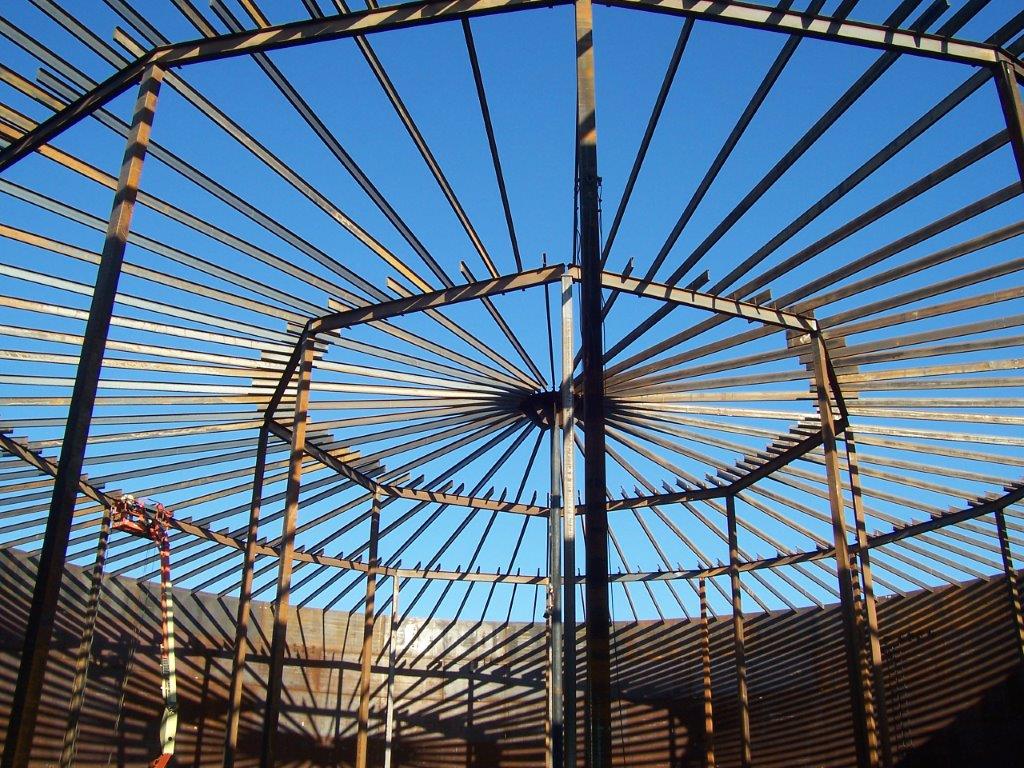
That's why forward-thinking facility managers are increasingly recognizing the strategic advantage of partnering with a well-established U.S. manufacturer like WINBCO Tank Company — delivering custom tank solutions on time, shop-fabricated with precision here in Ottumwa, Iowa since 1939, or field-erected at your location.
The Demand for Faster, More Reliable Wastewater Processing Tanks
While it may not be the most exciting industry for headlines, the wastewater sector continues to see substantial technological change. A good example is how newly developed modular and decentralized treatment systems are reshaping infrastructure planning. Basically, that allows treatment capacity to be scaled incrementally and distributed more precisely across sites.
For small communities, commercial facilities, as well as rural areas, these modular systems offer flexibility that traditional centralized plants cannot match.
At the same time, service-based delivery models are gaining traction. Utilities are prioritizing solutions that are resilient, cost-stable, and deployable far faster than conventional construction. Performance-based agreements spread costs over time, while decentralized solutions reduce expensive pipe runs and keep more water local for reuse. We’ve been seeing these shifts crop up throughout procurement language and planning documents across the country.
Digital transformation is accelerating as well. You hear about it in almost every industry, and wastewater plants are no exception. Real-time sensor networks monitor water quality across cities and industrial zones, while AI-driven systems enable leak detection, pump optimization, and climate-based demand forecasting. The global AI in water and sanitation market is projected to reach $24.45 billion by 2031, growing at a CAGR of 26.8%. Machine learning now detects contaminants before they become hazardous, etc.
Yet all of these technological advancements depend on one foundational element: the physical infrastructure that stores, processes, and moves wastewater through treatment systems. Advanced monitoring and automation mean nothing if the tanks and vessels themselves aren’t built to last or can’t be delivered when needed.
That’s where WINBCO steps in.
WINBCO: A Dependable Manufacturing Partner in Critical Infrastructure
WINBCO Tank Company has spent more than eight decades building tanks that withstand harsh environments and demanding applications. Our reputation is built on measurable performance. We’ve completed more than 3,000 jobs in the past 10 years, with 98% of projects finished on time. We maintain 100% repeat business with all multiple-location customers, a statistic that reflects our commitment to reliability and quality.
Wastewater applications present unique challenges. Storage tanks for wastewater treatment must resist corrosion from aggressive chemicals, withstand temperature variations, and maintain structural integrity under pressure. WINBCO constructs these vessels using long-lasting carbon or stainless steel, depending on the application. Stainless steel offers the highest life expectancy compared to epoxy-coated or glass-lined alternatives, which are far more susceptible to costly repairs and premature failure.
We specialize in ASME code pressure vessels, API 650 tanks, and UL 142 tanks—industry-standard codes that ensure safety, structural soundness, and regulatory compliance. Our fabrication capabilities accommodate tanks up to 14 feet in diameter and up to 150 feet tall in the shop, with larger capacities available through field erection services. Depending on the application, our tanks support considerable volumes exceeding 2 million gallons.
For wastewater plants implementing advanced treatment technologies like upflow anaerobic sludge bed (UASB) reactors, material quality becomes even more critical. UASB reactors depend on stainless steel that won’t be compromised by corrosion, which can lead to leaks and operational delays.
For wastewater operations across the U.S., WINBCO’s forward-thinking approach to tank construction has maximized longevity and lowers overall maintenance costs throughout the vessel’s lifespan.
Get in touch to see what we can do for your next custom tank fabrication project, as well as your ongoing expansion / maintenance costs.